
Unlocking Chiapas: An Introduction to the Tzotzil Language and Culture
While most travelers come to the highlands of Chiapas to admire the colonial architecture of San Cristóbal de las Casas, the true soul of this region lies in a sound that predates the Spanish arrival by millennia. It is the rhythmic, tonal, and poetic sound of Tzotzil (Bats’i k’op), a Mayan language spoken by over 400,000 people in the surrounding mountains.
At SanCris Language School, we believe that understanding a place requires understanding its original tongue. For the curious traveler or the dedicated academic, learning even the basics of Tzotzil is the ultimate key to unlocking the complex and beautiful social fabric of Chiapas.
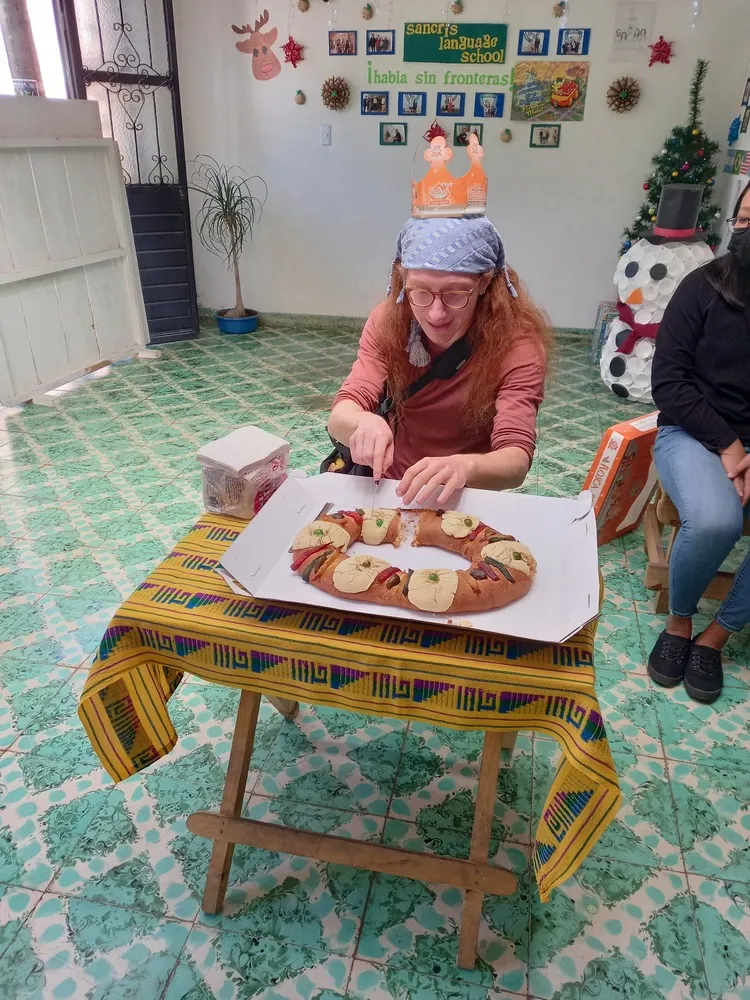
Caption: The Tzotzil language is intricately woven into the daily life and traditions of the Chiapas highlands.
The Living Roots of the Maya
Tzotzil is not a “relic” of the past; it is a vibrant, living language. In communities like San Juan Chamula and Zinacantán, it is the primary language of the home, the market, and the sacred ritual. For students at our school, witnessing this linguistic resilience is often the highlight of their journey.
The name Bats’i k’op literally translates to “the true word.” To speak Tzotzil is to enter a worldview where nature, spirituality, and community are inseparable. For example, many greetings in Tzotzil don’t just ask “how are you,” but inquire about the state of your soul and your connection to the Earth.
— Emily S., Anthropology Researcher
Why Study Tzotzil at SanCris Language School?
As we analyzed in our technical review, offering specific courses in indigenous languages sets a school apart from generic commercial centers. We provide a bridge for those who want to go beyond the surface of “taco and tequila” tourism.
- Native Speakers as Instructors: Our Tzotzil workshops are led by native speakers from local communities who share not just grammar, but the oral history of their ancestors.
- Bridge to Spanish: Many of our students choose to combine their Spanish intensive courses with an introduction to Tzotzil to see the fascinating linguistic “syncretism” of the region.
- Cultural Etiquette: We teach you the “dos and don’ts” of visiting indigenous towns, ensuring your presence in Chiapas is respectful and conscious.
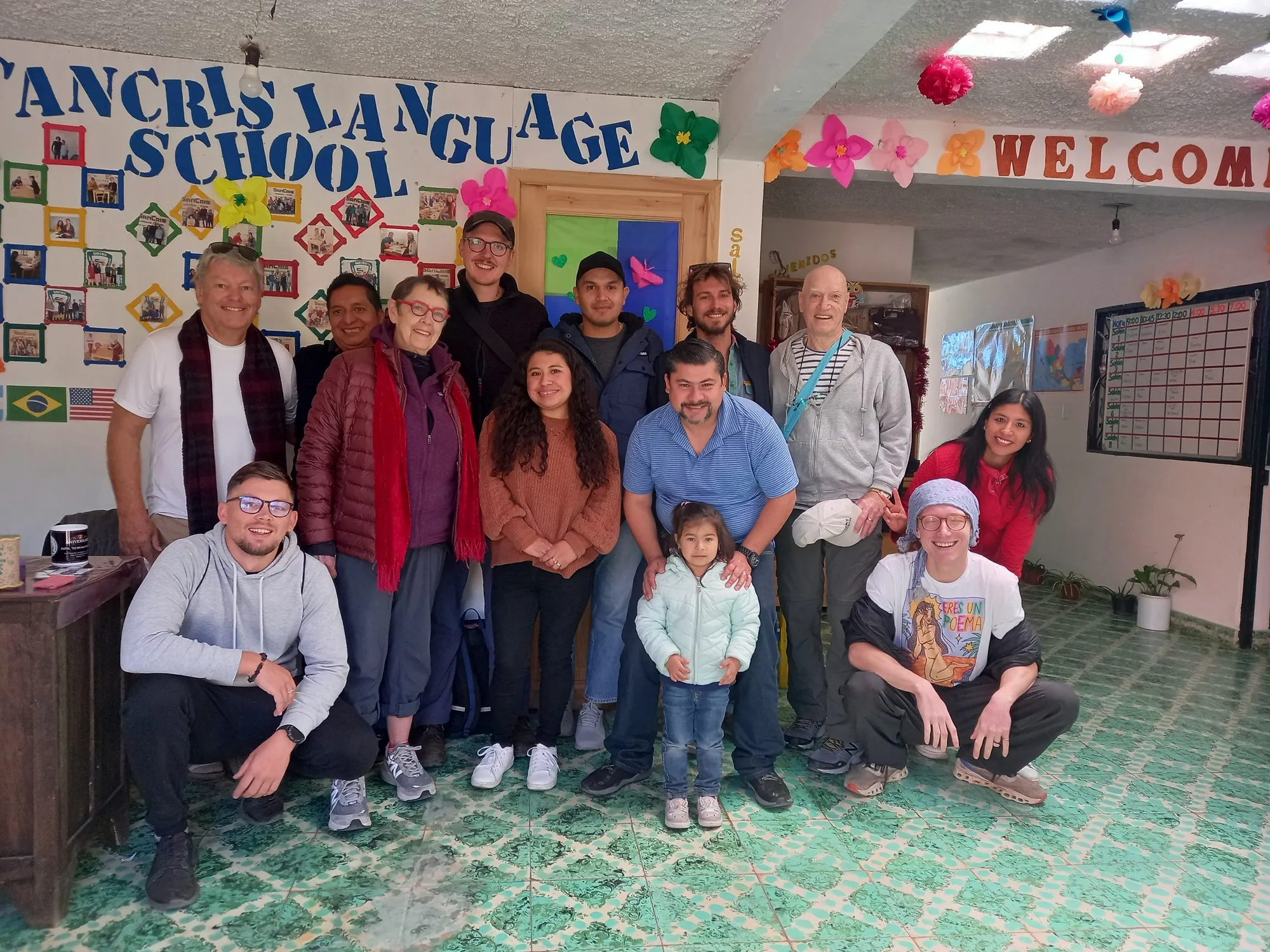
Caption: SanCris facilitates meaningful connections between international students and local indigenous cultures.
The Sounds of the Highlands: A Linguistic Preview
If you are used to Romance languages, Tzotzil will challenge your ears in the best way possible. It is a glottalized language, meaning it uses sounds produced by closing the vocal cords. These “popping” sounds give the language a percussive quality that is unlike anything you’ve heard in English or Spanish.
Learning Tzotzil also helps you understand the Spanish spoken in San Cristóbal. Many local expressions and even the names of plants and foods are directly derived from Mayan roots. By studying one, you inevitably become better at the other.
Preserving the “True Word”
By choosing to learn about Tzotzil, you are contributing to the visibility and preservation of a language that has faced centuries of marginalization. At SanCris Language School, we are proud to be a space where these languages are celebrated and shared with the world.
Learning Tzotzil: Common Questions
Is Tzotzil hard to learn?
It has a different structure than English, but it is incredibly logical. Our introductory courses focus on conversational basics that you can use immediately in the highlands.
Do I need to speak Spanish first?
While most of our Tzotzil instruction uses Spanish as a bridge, we can accommodate English speakers who want to dive straight into the Mayan world.
Are these classes available online?
Yes! We have expanded our “Learn Tzotzil Online” program to reach researchers and enthusiasts worldwide who cannot travel to Chiapas.